


WARNING AGAINST INSTIGATION AND ITS DESTRUCTIVE CONSEQUENCES
Dated: June 23, 2026.
Introduction
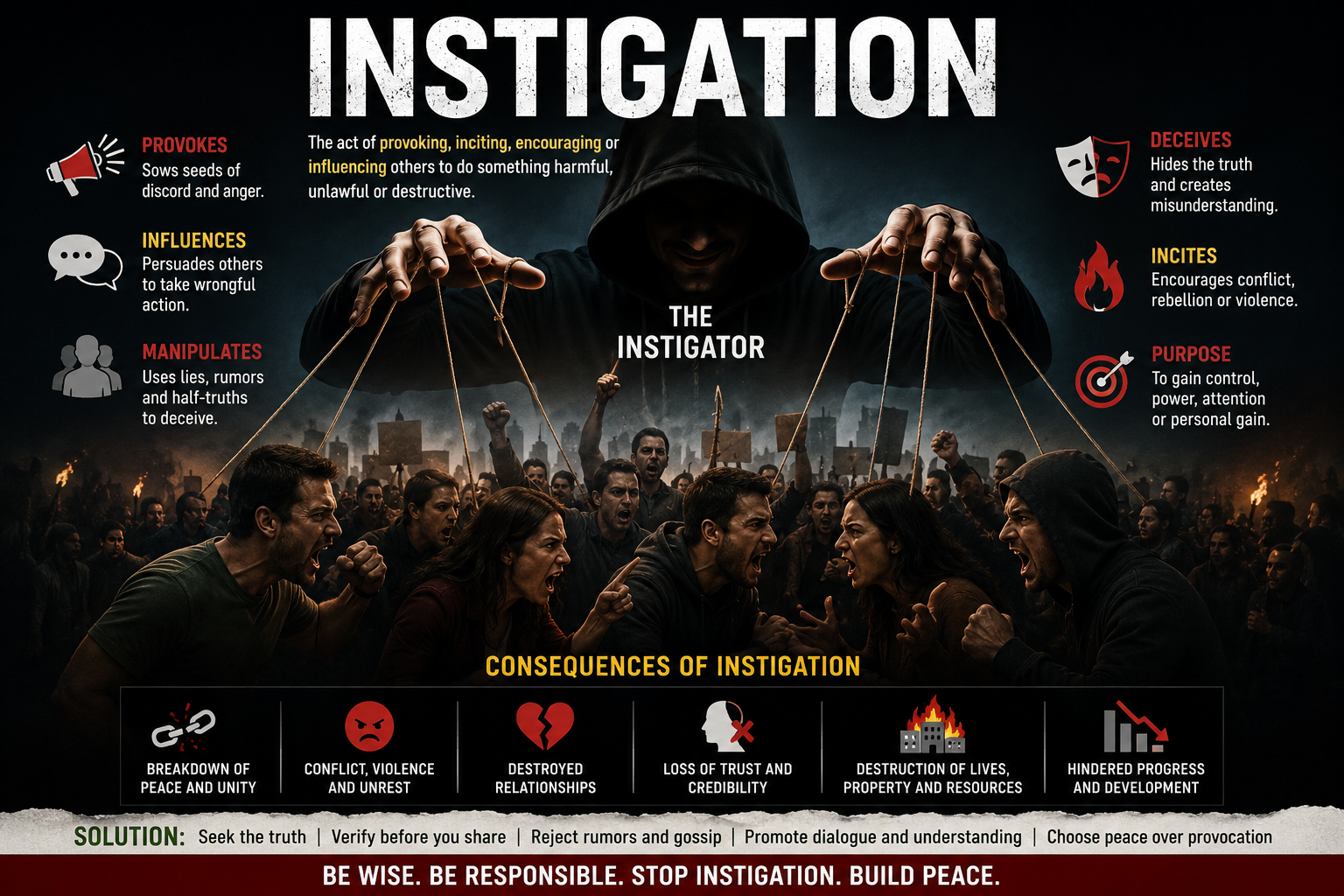
Instigation is the act of provoking, encouraging, persuading, or inciting another person or group to carry out an action, especially one that is harmful, unlawful, violent, or disruptive. An instigator is a person who deliberately influences others to engage in conflict, wrongdoing, rebellion, hatred, or destructive behavior.
Instigation can occur through words, actions, rumors, false information, manipulation, or emotional provocation. It is often used to create division, confusion, hostility, and unrest among individuals, families, communities, organizations, and nations.
Meaning of Instigation
The word “instigation” originates from the idea of urging someone forward into an action. It involves:
Provoking people to act.
Encouraging rebellion or disobedience.
Stirring up anger, hatred, or violence.
Influencing others to commit wrong acts.
Creating conflict where peace previously existed.
In simple terms, instigation means pushing or influencing someone to do something they might not have done on their own.
What Instigation Can Cause:
- Conflict and Division
Instigation often creates misunderstandings and disagreements among people. Families, friends, colleagues, and communities can become divided because of words spoken by instigators. - Violence and Unrest
When people are incited against one another, it can lead to physical confrontations, riots, wars, and destruction of property. - Hatred and Enmity
Instigation promotes bitterness and resentment. It destroys love, trust, and unity among individuals and groups. - Loss of Trust
An instigator spreads suspicion and doubt. Once trust is broken, relationships become difficult to repair. - Legal Consequences
Many legal systems consider instigation of crime a serious offense. A person who encourages criminal acts may be held responsible for the consequences. - Organizational Collapse
In organizations, instigation can create factions, disobedience, corruption, and leadership crises, resulting in reduced productivity and eventual collapse. - National Instability
Political instigation can lead to social unrest, ethnic conflicts, terrorism, revolutions, and even civil wars.
The Destructive Effects of Instigation
Destruction of Relationships
Instigation destroys friendships, marriages, partnerships, and family bonds. Years of trust can be ruined by a few words of provocation.
Destruction of Peace
Where instigation thrives, peace disappears.
Communities become filled with tension, fear, and insecurity.
Destruction of Reputation
False accusations and malicious rumors spread through instigation can damage a person’s good name and credibility.
Destruction of Progress
A society or organization consumed by conflict cannot focus on development. Instigation hinders growth, innovation, and prosperity.
Destruction of Unity
Unity is one of the greatest strengths of any group. Instigation attacks that unity by creating camps, rivalries, and divisions.
Destruction of Lives and Property
In extreme cases, instigation leads to violence, resulting in injuries, deaths, displacement of people, and destruction of valuable property.
How to Prevent Instigation
Promote truth and accurate information.
Verify facts before acting or reacting.
Encourage dialogue and peaceful conflict resolution.
Reject rumors and gossip.
Foster unity, understanding, and mutual respect.
Hold instigators accountable for their actions.
Practice wisdom, patience, and self-control.
Conclusion
Instigation is a dangerous act that seeks to influence others toward conflict, disorder, or wrongdoing.
Its effects can be devastating, leading to broken relationships, violence, division, loss of trust, and societal instability. Individuals, organizations, and nations must remain vigilant against instigation and instead promote peace, truth, unity, and constructive dialogue for the benefit of all.
AGP News
The Voice


